

Honeywell TDC‑3000 BASIC,AM Application Module CPU,51401551‑200,K2LCN‑2
TDC‑3000 BASIC,AM Application Module CPU,51401551‑200.K2LCN‑2
“towers”) which together contain the electronics, two cartridge disk drives, and a history
module. The cabinet electronics support up to four color monitors, four keyboards, and
optional touchscreens or trackballs. A printer is also connected to the system.
Two electronics modules, one housed in each tower, provide all of the electronics for the
Enhanced Micro TDC3000 Control System (excluding peripherals). These modules,
called Multinode Modules, are each capable of holding four TDC 3000 Nodes.
Although the Advanced Process Manager (APM) is part of the Enhanced Micro TDC3000
Control System, it is not described in this manual. See subsection 1.5 for a list of
publications that discuss the Advanced Process Manager and the Universal Control
Network (UCN).
Figure 1-2 is a representation of some of the nodes used to construct a sample Enhanced
Micro TDC3000 Control System.
The Enhanced Micro TDC3000 Control System is furnished with one basic version. This
is the single US Micro TDC3000.
The base version consists of two 4-node towers, an operator’s keyboard, an engineer’s
keyboard, a color monitor and printer (ordered seperately), and the Advanced Process
Manager. Four nodes are contained within the two towers:
1. US—UNIVERSAL STATION A window to the process—allows all information
supplied from process-connected devices, instrumentation subsystems, and
computers to be seen and used. The color monitor, two keyboards, an optional
touchscreen or trackball, two cartridge disk drives, and the ASPI-41 printer are
integral parts of the Universal Station.
2. AM—APPLICATION MODULE Performs calculations and control strategies that are
not possible or practical using only process-connected devices. The Application
Module has 4 or 8 megawords of memory.
3. NIM—NETWORK INTERFACE MODULE Connects the Enhanced Micro TDC3000
Control System to a process controller, generally to a Advanced Process Manager.
4. HM—HISTORY MODULE Provides mass storage of software, system data, and
customer/user data.
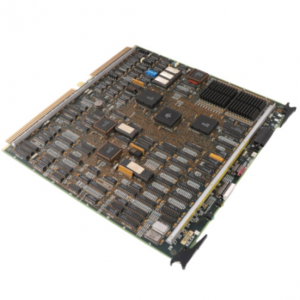
51401551‑200,K2LCN‑2
1.1.2 Options to the System
Monitors, touchscreens or trackballs, and printers are options to all the Universal Stations
in all versions of systems. A touchscreen or trackball allows you to “point” to areas on the
graphic display and select operations to be performed. Without either of these options, you
must use directional keys (arrows) on the keyboards to navigate across the screen.
Up to four additional nodes, making a total of eight nodes, may be added to basic
Enhanced Micro TDC3000 Control System. Choose from the following:
1. NIM—REDUNDANT NETWORK INTERFACE MODULE Provides a second path to the
process controller in the event of an electrical failure.
2. US—UNIVERSAL STATION (4Mw and 6Mw) Provides a window to the process.
3. EPLCG—ENHANCED PROGRAMMABLE LOGIC CONTROLLER GATEWAY Provides a
path to one or more Programmable Logic Controllers.
4. PLNM—PLANT NETWORK MODULE Provides the hardware and software to link the
LCN to the VAX interfaces.
5. CG—COMPUTER GATEWAY Provides a path to a host computer.
6. NG—NETWORK GATEWAY Provides a path to an alternate network for an integrated
plant solution (single and dual cable)