

CP461-50 Yokogawa Processor Module
The Yokogawa CP461-50 is a high-performance Processor Module (CPU) designed for the CENTUM VP Distributed Control System (DCS).
It is the “brain” of the Field Control Station (FCS), responsible for executing control logic, managing I/O data, and communicating with the rest of the network.
1. Introduction
The CP461-50 is specifically used in the AFV30D and AFV30S Field Control Units. As a core processor, it handles the real-time execution of regulatory control, sequence control, and arithmetic calculations.
The “-50” suffix typically denotes an updated hardware revision or a specific feature set (such as enhanced memory or G3 corrosive gas resistance) compared to earlier versions.
It is designed for high availability, allowing for a dual-redundant configuration where two CP461 modules work in tandem to ensure zero-second switchover in case of a failure.
2. Technical Parameter Table
| Feature | Specification |
| Model Code | CP461-50 |
| System Compatibility | CENTUM VP (typically R5 or R6) |
| Controller Unit | AFV30S (Single) / AFV30D (Duplex) |
| Network Interface | Vnet/IP (1 Gbps) |
| Memory | High-capacity ECC RAM (Error Correcting Code) |
| Control Cycle | 10 ms to 1 s (User configurable) |
| Maximum I/O Capacity | Up to 128 nodes (with appropriate licenses) |
| Redundancy | Supported (Synchronized memory for duplex operation) |
| Current Consumption | 1.0 A at 5V DC |
| Weight | Approx. 0.45 kg |
3. Related Models
The CP461-50 operates within a specific ecosystem of Field Control Unit components:
VI702: The Vnet/IP Interface module that works alongside the CPU.
PW481 / PW482: The power supply modules that feed the CP461.
AFV30D / AFV30S: The physical enclosure (Field Control Unit) for this processor.
CP471: The successor/upgraded processor module for newer CENTUM VP releases.
SB401: The bus interface module used to connect to I/O nodes.
4. Product Advantages and Features
Vnet/IP Native: Built to communicate over 1 Gbps Ethernet-based Vnet/IP, providing high-speed data throughput for large-scale plant monitoring.
High-Speed Execution: Capable of processing thousands of control loops and sequence logic steps within millisecond scan cycles.
Reliable Redundancy: Supports Dual-Redundant operation. The standby CPU’s memory is perfectly synchronized with the active CPU, allowing for a seamless transition that does not bump the process.
Advanced Diagnostics: Built-in self-checking hardware monitors CPU temperature, memory integrity, and instruction execution.
Backward Compatibility: Can often be integrated into existing CENTUM VP systems to replace older CP451 or CP401 modules (subject to software revision).
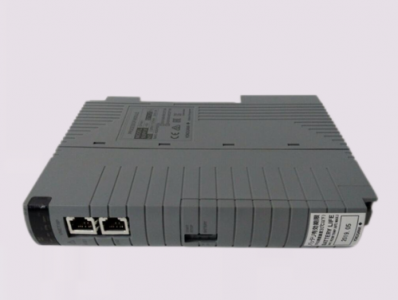
CP461-50
5. Application Cases
Complex Chemical Reactors: Managing high-speed PID loops and intricate safety interlocks that require fast processing times.
Oil & Gas Refineries: Coordinating massive amounts of I/O across large distances using the Vnet/IP backbone.
Power Generation: Controlling turbine and boiler sequences where timing and synchronization are critical to grid stability.
LNG Terminals: Handling the complex logic required for cryogenic storage and regasification processes.
6. Other Models in the Same Series
CP461-10: The standard version without enhanced environmental protection.
CP451: An older generation processor for the CENTUM VP / CS 3000 transition period.
CP471: The latest high-performance processor module featuring even faster processing speeds and larger memory capacity.
CP461-51: A variant typically including specific conformal coating (ISA G3) for high-sulfur or high-humidity environments.