

IS420PUAAH1A Universal input/output module
IS420PUAAH1A Universal input/output module
The IS420PUAAH1A is a high-performance general-purpose input/output module designed by General Electric (GE) for Distributed control systems (DCS) and Power balance (BOP) control systems.
The module belongs to the Mark VIe series and is widely used in industrial automation, energy management, manufacturing and environmental monitoring, such as production line monitoring, equipment condition detection, power industry optimization, steel plant production management, etc.
Functional and technical parameters
Input/output channels:
Analog input: 16 simplex analog channels, configurable for thermocouple I/O, RTD I/O, voltage input, 4-20mA current input, 0-20mA current input, pulse accumulator, and digital input.
Analog output: supports digital output and analog output.
Working environment:
Operating temperature range: -40°C to 158°F (relative humidity 5% to 95%, non-condensing).
Storage temperature range: -40°C to +85°C.
Communication protocol:
Supports Modbus, Profibus, Ethernet and other communication protocols.
Compatible with ControlST software version 7.02.00C or later.
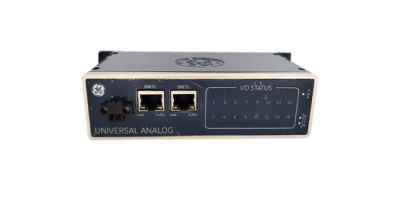
IS420PUAAH1A
Module features:
High precision measurement capability, measuring accuracy is better than 0.1%.
Supports hot swap for easy maintenance and replacement.
Automatic reconfiguration ensures seamless system switching during module replacement.
Dimensions and installation:
Dimensions: 6.2 “x 4.3” x 1.5 “.
Installation mode: Wall-mounted or rack-mounted.
Protection level:
Protection class IP67 ensures stable operation in harsh environments.
Other features:
High reliability: High quality components, long service life.
Easy to expand and maintain: Modular design facilitates troubleshooting and reduces system footprint.
Application field
IS420PUAAH1A is widely used in the following fields:
Industrial automation: for data acquisition, signal conversion and control output.
Energy management: Optimize energy use and improve energy efficiency.
Manufacturing: Monitor the status of production line equipment to improve production efficiency.
Environmental monitoring: real-time monitoring of environmental parameters to ensure compliance with environmental standards.