

AMAT VAS104350-0415 Gasline Heater Control Unit
AMAT VME6U1V2 is a specialized VMEbus Backplane Interface Module specifically designed for Applied Materials semiconductor tools.
This component serves as a critical connectivity node within the VME (Versa Module Eurocard) control rack, facilitating communication between the tool’s central processing unit and various peripheral I/O cards.
Technical Parameter Table
| Parameter | Specification |
| Part Number | VME6U1V2 |
| Manufacturer | Applied Materials (AMAT) |
| Form Factor | 6U VME Standard |
| Interface Type | VMEbus P1/P2 Interconnect |
| Bus Width | 32-bit / 64-bit compatible |
| Board Revision | V2 (Updated Signal Integrity) |
| Mounting | Vertical Rack Mount |
| Weight | ~0.45 kg |
Related Models
The VME6U1V2 is typically found in the same equipment racks as these high-performance controllers:
0090-76133: Synergy Microsystems V452 CPU Board.
0190-24115: MKS CDN391R DeviceNet Interface.
0190-07910: Falcon PC-MIP Serial Communication Card.
VME6U1V1: The predecessor/initial revision of this backplane interface.
Application Cases
The VME6U1V2 is a core infrastructure component for several AMAT toolsets:
Centura & Endura Platforms: Serving as the signal backbone for the primary system controller in 200mm and 300mm wafer processing tools.
Chamber Controller Management: Coordinating data from multiple process chambers to ensure synchronous operation.
Legacy Maintenance: Used as a vital replacement part for maintaining the operational life of “Golden Line” fab equipment that relies on VME architecture.
Product Advantages and Features
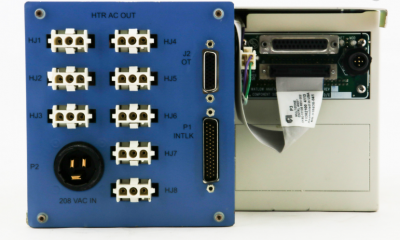
VAS104350-0415
Enhanced Signal Integrity: The “V2” revision features optimized trace routing to reduce electromagnetic interference (EMI) and crosstalk between high-speed data lines.
Ruggedized Design: Built to withstand the constant thermal cycling and 24/7 vibration levels found in industrial sub-fab environments.
High-Density Connectivity: Utilizes precision DIN connectors to ensure reliable mechanical and electrical contact across all VME pins.
Plug-and-Play Compatibility: Engineered for seamless integration into existing AMAT VME cages without the need for manual backplane rewiring.
Other Models in the Same Series
The VME Series at AMAT covers the foundational electronics of the tool:
VME3U Series: Smaller form-factor modules for auxiliary systems.
VME6U1-Standard: Basic interconnect modules for non-process-critical systems.
VME6U2V2: Expanded interface modules with dual-bus support.
Installation and Maintenance
| WESTINGHOUSE | 5X00063G01 |
| WESTINGHOUSE | 5X00453G01 |
| WESTINGHOUSE | KL4502X1-FA1 |
| WESTINGHOUSE | KL4503X1-BA1 |
| WESTINGHOUSE | 5X00121G01 |
| Westinghouse | 1C31179G01 |
| WESTINGHOUSE | 5X00062G01 |
| WESTINGHOUSE | 5X00106G01 |
| WESTINGHOUSE | 1C31234G01 |
| WHEDCO | 78004654 |
| WIDAP | UFW30.156 6K8J175W0823 |
| WINGREEN | DSPB_V4.0_A02 03ZSTI7-00-402-RS |
| WINGREEN | ATKB_V5.0_A01 03ZSTI4-01-501 |
| WINGREEN | ATKB_V5.0_A01 03ZSTI4-00-501 |
| WINGREEN | FPB_V3.0_A01 03ZSTJ1-00-301-RS |
Installation: Ensure the VME rack is powered down and the main breaker is locked out.
Align the VME6U1V2 with the card guides and push firmly until the handles click. Secure the faceplate screws to provide a consistent chassis ground.
Maintenance: Periodically check the P1 and P2 connectors for signs of “fretting” or carbon buildup.
If the tool experiences “Bus Errors,” clean the gold-plated contact pins with an electronics-grade solvent.
ESD Warning: Like all semiconductor control boards, this module is highly sensitive to electrostatic discharge.
Use a grounded wrist strap and anti-static matting during all handling procedures.
Unique Product Description
The AMAT VME6U1V2 is the essential “nervous system” of the VME control rack.
While individual processors execute recipes, this board ensures that every signal—from vacuum sensors to robot motor commands—travels without delay or distortion.
Its V2 architecture represents the pinnacle of reliability for VME-based semiconductor manufacturing,
providing the stable electrical environment required for the high-yield production of modern integrated circuits.