

MOTOROLA MVME300 High-Reliability GPIB VMEbus Controller
MOTOROLA MVME300: High-Reliability GPIB VMEbus Controller
The Motorola MVME300 (also known as the MVME300A) is a high-performance IEEE-488 (GPIB) interface module designed for the VMEbus architecture.
It serves as a bridge between high-speed VME-based computing systems and the extensive world of GPIB-compatible laboratory instruments, automated test equipment (ATE), and peripheral devices.
Engineered for industrial-grade durability and precise timing, the MVME300 remains a staple for engineers maintaining legacy data acquisition and control systems.
Technical Parameter Table
| Parameter | Specification |
| Model | MVME300 / MVME300A |
| Interface Standard | IEEE-488 (GPIB) |
| Controller Type | TMS9914ANL GPIB Controller |
| Data Transfer Mode | Direct Memory Access (DMA) support |
| Bus Compatibility | VMEbus (Double-high 6U Form Factor) |
| Indicators | Fail Status LED (Red) for diagnostic feedback |
| Configuration | Front-panel accessible DIP switches |
| Connector | Standard 24-pin IEEE-488 (GPIB) interface |
| Operating Temp | 0°C to +55°C (Standard industrial range) |
| Power Requirements | +5V DC ± 5% |
Related Models & Series
The MVME300 is part of the extensive Motorola MVME family of VMEmodules. Key related hardware includes:
MVME147 / MVME167: Standard 68030/68040-based host CPU boards often used to control the MVME300.
MVME330: Ethernet LAN Controller for networking VME systems.
MVME320: Winchester/Floppy disk controller for storage management.
MVME300A: An enhanced version of the original module with improved timing and reliability characteristics.
Product Advantages and Features
DMA Capability: Efficiently offloads data transfer tasks from the main CPU, allowing for high-speed data acquisition without interrupting system processing.
Multi-Mode Operation: Supports Listener, Talker, and Controller modes, making it versatile for both controlling instruments and acting as a peripheral.
Robust Hardware Diagnostics: The “Fail” LED provides immediate visual confirmation of hardware integrity during the Power-On Self-Test (POST).
Simplified Configuration: User-selectable DIP switches on the front panel allow for quick address and mode changes without removing the board from the rack.
Legacy Stability: Built for longevity in 24/7 environments, specifically optimized for real-time operating systems like VxWorks and OS-9.
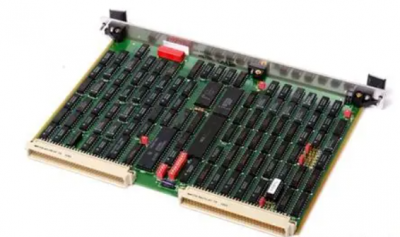
MVME300
Application Cases
Automated Test Equipment (ATE): Controlling a rack of oscilloscopes, multimeters, and signal generators in semiconductor testing environments.
Scientific Research: Managing data collection from specialized sensors in physics or chemistry laboratories using the IEEE-488 protocol.
Industrial Control Systems: Integrating legacy factory floor devices that communicate via GPIB into a modern VME-based DCS or PLC framework.
Installation and Maintenance
Handling: Always handle the board by its edges or front panel. Use an ESD-safe wrist strap to prevent static damage to the TMS9914ANL controller.
Slot Placement: Insert the 6U module into any available non-slot-1 I/O slot in the VME backplane. Ensure the board is firmly seated before tightening the front-panel screws.
Switch Settings: Verify the base address and interrupt level via the DIP switches according to your system’s memory map before powering on.
Maintenance: Periodically check the GPIB connector for bent pins or debris. Clean the gold-plated VMEbus edge connectors with isopropyl alcohol if connection errors occur.
Unique Product Description
The Motorola MVME300 is the definitive choice for engineers requiring a robust GPIB VMEbus interface.
As a dedicated IEEE-488 Listener/Talker/Controller, it bridges the gap between sophisticated VME processor modules and benchtop instrumentation.
Whether you are managing a legacy MVME147 system or a modern high-availability industrial rack, the MVME300 provides the DMA-powered performance and reliability that Motorola is known for.
Optimized for industrial automation and scientific data acquisition, this module ensures low-latency communication and seamless integration with standard VMEbus chassis.
Don’t let your legacy hardware become a bottleneck—enhance your system’s communication capabilities with a genuine MVME300/D2 controller.