

Woodward MSLC-2XT 8440-2298 Master Synchronizer and Load Control
Woodward MSLC-2XT 8440-2298 Master Synchronizer and Load Control
MSLC-2XT™
Master Synchronizer
and Load Control
New Features
Direct Connect Up to 690 V
AC
Software selectable 1A/5A CT
input
Enhanced hardware isolation
Three Ethernet communica
tion ports
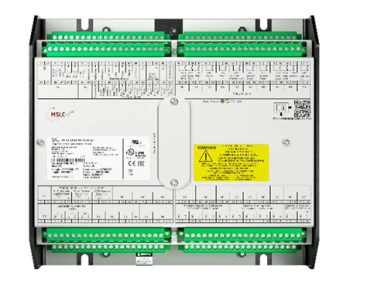
MSLC-2XT
Drop-In replacement
Woodward’s MSLC-2XT™ functions with the DSLC-2XT™ control to provide synchronization and
load control across Utility and Intertie breakers. The MSLC-2XT/DSLC-2XT combination operates
over an Ethernet communication network to control simple or complex generator system applica
tions. This combination, 32 DSLC-2XT’s and 16 MSLC-2XT’s, provide multiple units, multiple seg
ments, utility, and intertie power management for complex power systems. Controls plant wide Im
port / Export levels while always providing bump-less load transfers with utility.
The MSLC-2XT control combines synchronization, dead bus closing, utility/intertie load sensor,
baseload control, import/export control, VAR, power factor, and a master process control in one
powerful package.
The MSLC-2XT provides phase matching or slip frequency synchronization, with voltage matching,
across a utility or intertie breaker. The MSLC-2XT/DSLC-2XT combination can handle multiple util
ity connections with a maximum of 8 bus segments in one application.
The MSLC-2XT’s load sensor and load control sense true RMS power and provide a bump-less
loading and unloading against a utility grid. Baseload, import/export, process, and utility unload
modes control the KW power between different power sources at the same time controlling the re
active power, VAR and power factor. Reactive power is also ramped on and off for the smoothest
load transactions between power grids.
The MSLC-2XT communicates via Ethernet, with or without hot swap redundant communication, to
control real and reactive loading against the utility by DSLC-2XT equipped generators.
The tie breaker mode allows synchronization between multiple generator systems. Segments are
connected and power can be measured across an intertie, but no load control is functional when in
Tie breaker operation.
| GE | UR8LH |
| GE | UR6UH |
| GE | UR8NH |
| GE | UR9AH |
| GE | G60E00HAHF8LHXXM8LPXXUXXWXX |
| GE | T35E00HAHF8FH6AM8HP6EUXXWXX |
| GE | UR8CH |
| GE | IS215ACLEH1BB |
| GE | IS215ACLEH1AB |
| GE | IS200EROCH1ABB |
| GE | IS200ERIOH1AAA |
| GE | IS200ERDDH1ABA |
| GE | IS200DSPXH1DBD |
| GE | EX2100 |
| GE | DS215TCQAG1BZZ01A |
| GE | DS200SDCCG5AHD |
| GE | IS200JPDDG1AAA |
| GE | IS230TDBTH6A |
| GE | IS200TDBTH6ABC |
| GE | IS230STAOH2A |
| GE | IS200STAOH2AAA |
One MSLC-2XT can provide master control for up to 32 DSLC-2XT and an additional 15 MSLC-2XT.
Two dedicated Ethernet lines for precise system communications between all DSLC-2XT’s and
MSLC-2XT’s on the system.
One dedicated Ethernet Modbus TCP for remote control and monitoring by PLC or DCS system.
Redundant Ethernet communications for enhanced reliability.
Master MSLC-2XT redundancy, loss of communications with the designated MSLC-2XT master initiates con
trol hand off to the next designated MSLC-2XT master.
The MSLC-2XT hardware is adjustable for multiple applications.
Slip frequency or voltage phase matching synchronizing fully selectable with dead bus option in both direc
tions provide full flexibility for intertie and main-tie-main applications.
Having functions integrated into one box eliminates the need for redundant sensors (like PTs, CTs, and
MOPs) that connect to individual modules such as the load sensor and synchronizer.
Digital signal processing makes the MSLC-2XT resistant to power line distortions and harmonics.
Three-phase true RMS power sensing provides accurate readings even with unbalanced phase loading and
voltage fluctuations.
Export/import control over multiple utility MSLC-2XT’s in same segment.
The Woodward ToolKit™ software allows flexible setup using the same basic menu tree as the original
MSLC-2 plus an overview screen. Graphical overview of generators and bus bar parameters with trending
makes the MSLC-2XT commissioning friendly.
The Toolkit can be accessed either via one of the Ethernet ports or via USB port.
Phase angle compensation provides adjustment for additional deviation correction across a transformer.
The system update feature allows for system reconfiguration.