

YOKOGAWA ADV551 Digital output module
The YOKOGAWA ADV551 is a high-reliability Digital Output Module designed for the CENTUM VP and CENTUM CS 3000 Distributed Control Systems (DCS).
It belongs to the FIO (Field network I/O) series and is used to command “On/Off” states for field equipment.
1. Introduction
The ADV551 is a 32-channel digital output module that provides contact signals to external devices.
In a process plant, it acts as the interface that allows the DCS to start motors, open/close solenoid valves, or trigger alarm lamps.
It is designed to be installed in an I/O node unit and can be configured for dual-redundancy to ensure continuous operation in critical environments.
2. Technical Parameter Table
| Parameter | Specification |
| Manufacturer | Yokogawa Electric |
| Model Number | ADV551 |
| Number of Channels | 32, isolated in groups |
| Output Type | Transistor Contact (Sink Type) |
| Rated Load Voltage | 24V DC |
| Max Load Current | 100 mA per channel |
| Output Response Time | $\le 40$ ms (including system delay) |
| External Connection | Pressure clamp or KS cable to terminal board |
| Redundancy | Supported (Dual-redundant configuration) |
| Current Consumption | Max. 500 mA (5V DC internal) |
| Weight | Approx. 0.3 kg |
3. Product Advantages and Features
High Density: 32 channels in a single slot allows for high-density I/O wiring, reducing the overall footprint of the DCS cabinet.
Redundancy Support: Two ADV551 modules can be paired.
If the active module detects an internal failure, the standby module takes over the output state seamlessly without a “bump” in the process.
Isolated Groups: The 32 channels are typically divided into groups (e.g., 8 channels per common), providing protection against localized electrical faults.
Status Monitoring: The front panel includes a “STATUS” LED and “OUT” indicators that provide immediate visual confirmation
of the module’s health and which channels are currently energized.
4. Application Cases
The ADV551 is used extensively in industries such as oil refining, petrochemicals, and power generation for:
Solenoid Valve Control: Managing the air supply to pneumatic actuators.
Motor Starters: Sending “Start/Stop” commands to MCC (Motor Control Center) panels.
Sequence Control: Coordinating the steps in batch processing or boiler light-off sequences.
Annunciator Panels: Driving visual and audible alarms in the control room or field.
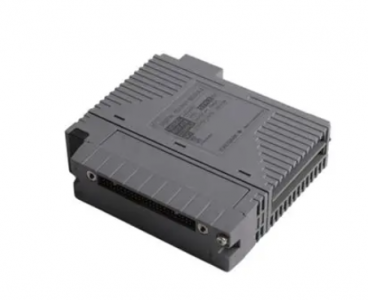
ADV551
5. Other Models in the Same Series (Digital I/O)
Yokogawa’s FIO series provides several digital variations based on voltage and channel count:
ADV151: Digital Input Module (32-channel, 24V DC).
ADV161: Digital Input Module (64-channel, 24V DC).
ADV561: Digital Output Module (64-channel, 24V DC).
ADV557: Digital Output Module with higher current capacity (Relay type).
ADV159 / ADV559: Specialized modules with Pulse/Status input/output capabilities.
6. Related Components
To integrate the ADV551 into your system, the following are usually required:
Terminal Boards: (e.g., AED5D or ATE5D) for field wiring termination.
KS1 Cable: A dedicated multi-core cable to connect the module front-face to the terminal board.
Baseplate: The ANB10D or AFV30D node unit where the module is inserted.